Quick Summary
- ✦ Parents and prospective students are shifting search habits—asking ChatGPT directly for institute and course recommendations.
-
✦
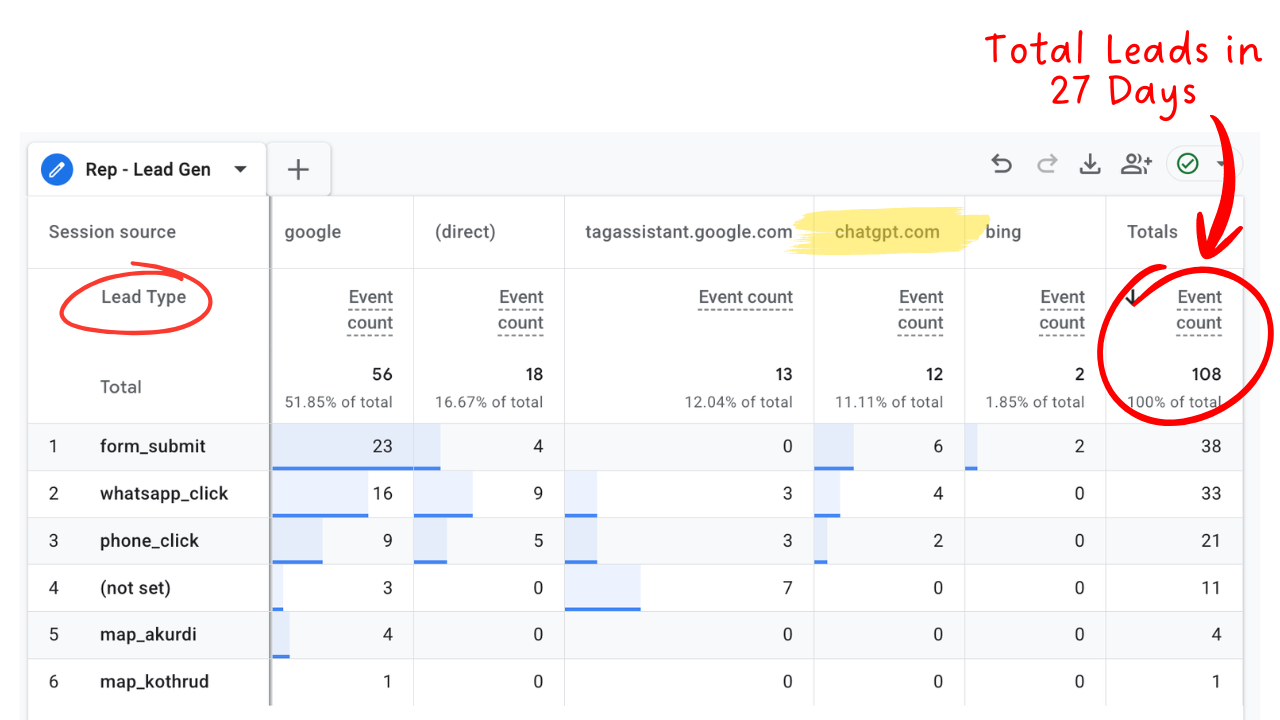
Within 30 days of deploying our structured SEO framework, our client received a qualified inbound form lead with confirmed
utm_source=chatgpt.comattribution. - ✦ AI recommendation is not accidental: it requires intent-focused content, entity-rich schema, and deep topical authority through AI SEO optimization.
- ✦ Optimizing for AI search engines unlocks a new, non-cannibalizing customer acquisition channel alongside traditional Google search.
Search user behavior is undergoing its biggest evolutionary shift in twenty years. Parents, students, and enterprise buyers are no longer relying exclusively on standard Google search results—they are having interactive conversations with ChatGPT and AI search assistants to find vetted recommendations.
Businesses that publish well-structured, authoritative, intent-matched content are becoming the primary sources that AI engines cite and recommend. This field case study demonstrates how a newly published course page generated a qualified enquiry directly through ChatGPT within one month of deployment.
1. Search Is Changing: From Google Query to AI Conversation
Traditional search behavior revolves around short keywords typed into a search bar, resulting in a list of ten blue links and sponsored ads. Modern consumers increasingly prefer conversational AI agents because they deliver synthesized answers, comparative options, and immediate conclusions without requiring hours of manual website browsing.
“Parents don't just search for 'robotics classes'. They ask ChatGPT: 'Which certified robotics training institutes near Pune have hands-on practical kits and proven student projects?'”
When an AI model answers that prompt, it searches its retrieval database and live web browsing indexes for pages that provide explicit, trustworthy, and semantically unambiguous answers.
2. The Lead: Verified utm_source=chatgpt.com Attribution
One month after launching the newly architected course page, our client received a qualified enquiry through their website intake form.
The form submission included the technical parameter utm_source=chatgpt.com, confirming that the visitor clicked through directly from a citation in a ChatGPT conversation. This wasn't superficial bot traffic—it was a genuine parent seeking an offline robotics course for their child.
Why UTM Attribution Matters:
- Referral Integrity: Proves the visitor initiated their buying journey inside ChatGPT rather than Google Ads or organic SERPs.
- Intent Quality: AI-referred leads possess higher pre-qualification because the user has already received an algorithmic recommendation.
- Measurable ROI: Connects technical AI SEO implementation directly to bottom-line pipeline revenue.
3. What We Implemented: The Generative SEO Approach
Earning an organic citation from OpenAI models requires a disciplined, multi-layered optimization strategy. We executed a complete AI SEO program built around foundational pillars:
- User Intent Content Engineering: Content crafted around specific questions parents ask, answering curriculum, prerequisites, age brackets, and project outcomes.
- Deep On-Page Semantic Optimization: Clear heading hierarchies (H1 to H3), clear entity definitions, and direct question-answer formatting.
- Topical Internal Linking: Seamlessly connected the course page to parent academy hubs and verified student portfolios to signal domain authority.
- Structured Data (Schema Markup): Embedded valid JSON-LD schemas including Course, EducationalOrganization, and FAQPage.
- Technical Architecture: Fast Core Web Vitals, clean static routing, and zero crawl obstructions.
The page went live in May. Within four weeks of indexation, live AI searches on ChatGPT began surfacing the client as a recommended academy in the local region.
4. Why AI Search Visibility Matters for Revenue
Being recommended by ChatGPT or Perplexity does not occur randomly. AI search engines are designed to reduce hallucinations by seeking out source pages that:
- Provide direct, verifiable factual data with zero marketing fluff.
- Demonstrate topical credibility across multiple interconnected pages.
- Offer clean, machine-readable structured markup that AI parsers can ingest effortlessly.
When these fundamentals are established, AI search transforms from a novel tech trend into a dependable, high-converting customer acquisition engine alongside traditional Google traffic.
5. Strategic Lessons for Modern Businesses
This verified lead illustrates a pivotal principle: optimizing web content is no longer solely about competing for traditional Google rankings. It is equally about positioning your brand as the authoritative answer when AI models evaluate and recommend providers.
The result was clear: a newly published page, architected with rigorous technical SEO and clear intent matching, was cited by ChatGPT and produced a qualified business lead within thirty days.
6. Frequently Asked Questions
Q:
How does ChatGPT recommend local businesses and training courses?
ChatGPT retrieves and cites live web pages that demonstrate high topical authority, clear semantic hierarchy, schema structured data, and direct answers to user intent. It prioritizes trustworthy sources that thoroughly address specific geographic queries.
Q:
What is the utm_source=chatgpt.com parameter in lead attribution?
When users click a link recommended inside ChatGPT conversations, modern browsers pass chatgpt.com as the referral source. Capturing utm_source=chatgpt.com in CRM form submissions confirms direct lead attribution from OpenAI's search engine.
Q:
How long does it take for AI search engines to index and recommend new pages?
With robust technical SEO, fast crawl discovery, and authoritative internal linking, newly published pages can begin appearing in ChatGPT search citations within 30 to 45 days of deployment.
Q:
Does AI search optimization replace traditional Google SEO?
No. Generative Engine Optimization (GEO) builds upon strong SEO fundamentals. High organic Google rankings, indexation, and authority directly correlate with higher citation rates in ChatGPT and Perplexity.
Q:
What structured data is essential for ChatGPT citation?
Schema markup such as Course, EducationalOrganization, LocalBusiness, FAQPage, and BreadcrumbList gives AI models explicit structured facts, pricing, curriculum, and location details that increase citation accuracy.
7. Final Thoughts: The Future of Discovery Channels
Modern discovery extends far beyond traditional rank positions. Comprehensive optimization ensures that when your potential customers ask conversational AI engines for recommendations, your business is presented as the authoritative choice.
Ready to Get Your Business Recommended by ChatGPT & AI Engines?
Discover how our specialized AI SEO and Generative Engine Optimization programs position your brand as the primary recommendation in modern search assistants.